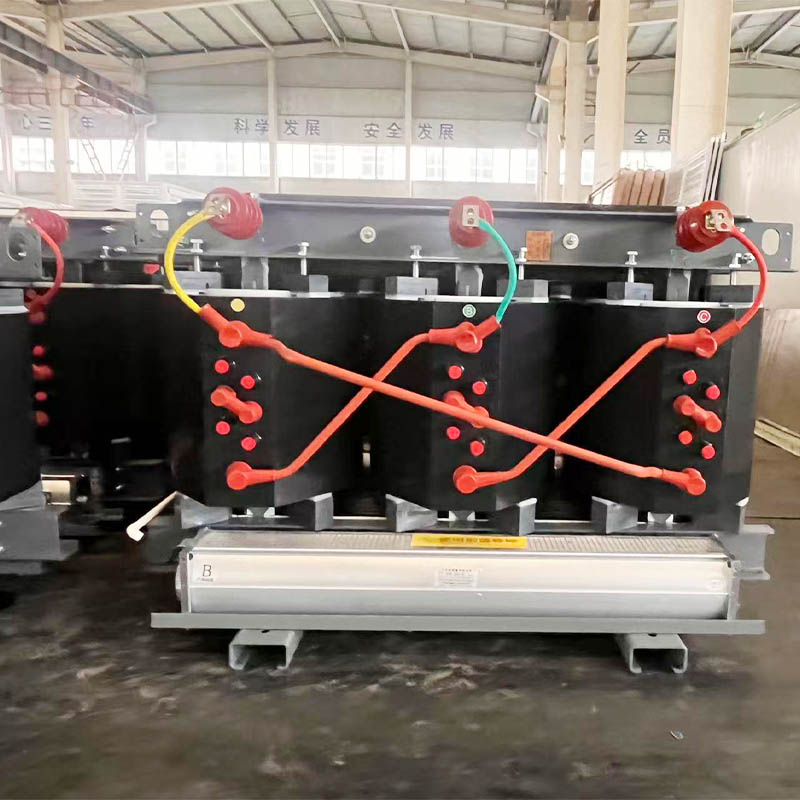
How does the epoxy resin cast dry-type transformer excel in energy conservation and emission reduction, particularly in reducing no-load and load losses?
Publish Time: 2025-11-17
With the advancement of the "dual-carbon" strategic goal, the energy efficiency level of power equipment has become an important indicator for measuring its green and low-carbon attributes. As a key piece of equipment in modern power distribution systems, the epoxy resin cast dry-type transformer is widely used due to its advantages such as safety, reliability, fire and explosion protection, maintenance-free operation, and environmental friendliness. Especially in terms of energy conservation and emission reduction, this type of transformer demonstrates significant advantages in reducing no-load and load losses through optimized material selection, structural design, and manufacturing processes.1. Technical Path to Reduce No-Load LossesNo-load losses mainly consist of hysteresis losses and eddy current losses in the core, which are closely related to the performance of the core material. Epoxy resin cast dry-type transformers generally use high-permeability, low-loss, high-quality cold-rolled grain-oriented silicon steel sheets as the core material. These materials have excellent magnetic induction intensity and low unit loss values, effectively reducing energy loss during magnetization. Furthermore, the core employs a stepped joint or multi-stage step-overlap structure, making the magnetic flux path more continuous and smooth, further reducing magnetic reluctance and additional losses. Meanwhile, strict control of the lamination process during core manufacturing avoids burrs, misalignment, and localized stress concentration, helping to reduce magnetic performance degradation caused by mechanical stress. Some high-end products also introduce amorphous alloy core technology, which can reduce no-load losses by more than 60% compared to traditional silicon steel sheets. Although the cost is higher, it has significant advantages in applications with extremely high energy efficiency requirements.2. Key Measures to Reduce Load LossesLoad losses mainly originate from resistive losses and additional losses in the windings. Epoxy resin cast dry-type transformers typically use high-purity oxygen-free copper as the winding conductor, which has high conductivity and low resistivity, effectively reducing basic resistive losses. In terms of winding structure design, using foil windings or segmented cylindrical windings not only improves the mechanical strength and heat dissipation performance of the windings but also effectively suppresses the skin effect and proximity effect under high-frequency currents, thereby reducing additional losses.Furthermore, the epoxy resin vacuum casting process itself also plays a positive role in energy saving. This process encapsulates the windings entirely within high-strength, high-insulation epoxy resin, forming a dense, monolithic structure. This not only enhances insulation strength and short-circuit withstand capability but also improves heat conduction paths, allowing for more even heat dissipation and preventing efficiency degradation caused by localized overheating. The excellent heat dissipation indirectly reduces the impact of temperature rise on resistance, thus maintaining lower operating losses.3. Additional Energy-Saving Benefits from System Integration and IntelligenceEpoxy resin cast dry-type transformers often integrate intelligent monitoring modules, such as temperature sensors and partial discharge detection devices, enabling real-time monitoring of operating status. Through data analysis, maintenance personnel can promptly adjust load distribution and optimize operating strategies, preventing the transformer from operating under prolonged light or overload conditions, thereby improving overall energy efficiency at the system level. Furthermore, combined with efficient power distribution system design, such as proper capacity matching and reduction of harmonic interference, overall losses can be further reduced.In summary, the superior energy-saving performance of epoxy resin cast dry-type transformers stems from the synergistic optimization of materials science, electromagnetic design, manufacturing processes, and intelligent operation and maintenance. By using high-performance core materials to reduce no-load losses, leveraging high-conductivity winding structures and advanced casting processes to reduce load losses, and employing intelligent management methods, this type of transformer not only meets the current development needs of a green power grid but also provides solid support for building an efficient, low-carbon, and safe new power system in the future.